Ceiling Stain Only Appears When Snow Melts? Why That Points to Ice Dams
August 5, 2026
Interior inspections help reveal roofing issues that may not yet be visible from the exterior.
Professionals look for:
- Water stains
- Discolored ceilings
- Damp insulation
- Mold growth
- Wood rot
- Structural deterioration
These indicators often reveal hidden leaks that require immediate attention.
Signs of Water Intrusion
You noticed it a few days after the last snowfall: a brownish ring on the ceiling near an exterior wall, maybe below a bathroom or at the edge of an upstairs bedroom. You watched it for a while, and it didn't spread. Then a warm spell hit, the snow on the roof started melting, and the stain came back — same spot, a little bigger this time. In between, nothing. No dripping, no new spots, no sign of trouble at all.
That pattern isn't random, and it isn't your imagination. A ceiling stain that only shows up or grows during snowmelt, and stays quiet the rest of the time, is one of the clearest signals a roof can give you. It almost always points to an ice dam — a ridge of ice at your roof's edge that's forcing meltwater backward, under your shingles, instead of letting it drain off the way it's supposed to.
Quick Answer:
A ceiling stain that appears only when snow is melting — and not during dry weather or even during the storm itself — is a strong sign of ice dam activity rather than a standard roof leak. Ice dams form when heat escaping into your attic melts snow near the roof's peak while the eaves stay cold, so the meltwater refreezes at the edge, builds up, and eventually backs water uphill under your shingles. Because that backup only happens while snow is actively melting above a frozen dam, the leak turns on and off with the weather instead of running constantly. Patching the stain treats the symptom. Fixing it means dealing with the attic heat loss and roof edge protection that let the dam form in the first place.
Interior inspections help reveal roofing issues that may not yet be visible from the exterior.
Professionals look for:
- Water stains
- Discolored ceilings
- Damp insulation
- Mold growth
- Wood rot
- Structural deterioration
These indicators often reveal hidden leaks that require immediate attention.
Signs of Water Intrusion
Why the Timing of the Stain Is the Real Clue
Most homeowners assume a roof leak works one way: water gets in, it drips, the stain grows steadily until someone fixes the hole. That's true for a lot of leaks — a cracked flashing seal, a torn shingle, a failed pipe boot. Those tend to leak whenever it rains or whenever snow on top of them turns to water, regardless of temperature.
An ice dam leak behaves differently, and once you know what to look for, the difference is obvious. It shows up specifically during freeze-thaw stretches — the kind of weather Connecticut winters hand you again and again, where a storm dumps snow, temperatures climb into the 30s or 40s for a day or two, then drop back below freezing overnight. That thaw-refreeze rhythm is exactly what builds an ice dam in the first place, and it's why the stain seems to have a mind of its own.
If your ceiling stain lines up with those melt cycles and goes dry in between, you're not dealing with a random leak. You're watching the visible result of water being pushed uphill by ice, one warm afternoon at a time.
Interior inspections help reveal roofing issues that may not yet be visible from the exterior.
Professionals look for:
- Water stains
- Discolored ceilings
- Damp insulation
- Mold growth
- Wood rot
- Structural deterioration
These indicators often reveal hidden leaks that require immediate attention.
Signs of Water Intrusion
How an Ice Dam Actually Forms
To understand why the leak comes and goes, it helps to understand what's happening on the roof itself, because the process has almost nothing to do with the outdoor temperature at that exact moment.
It starts with heat you're losing into the attic
Warm air from your living space rises. Some of it escapes through gaps around light fixtures, attic hatches, exhaust fans, and plumbing stacks, or simply through insulation that's too thin to hold the heat back. That warm air raises the temperature of your attic, which raises the temperature of the roof deck above it.
The upper roof warms enough to melt snow from underneath
Snow sitting over the heated part of your attic — generally the section above your living space — starts melting from the bottom up, even while the air outside stays well below freezing. That meltwater runs down the roof slope under the snowpack.
The eaves stay cold, and the water refreezes there
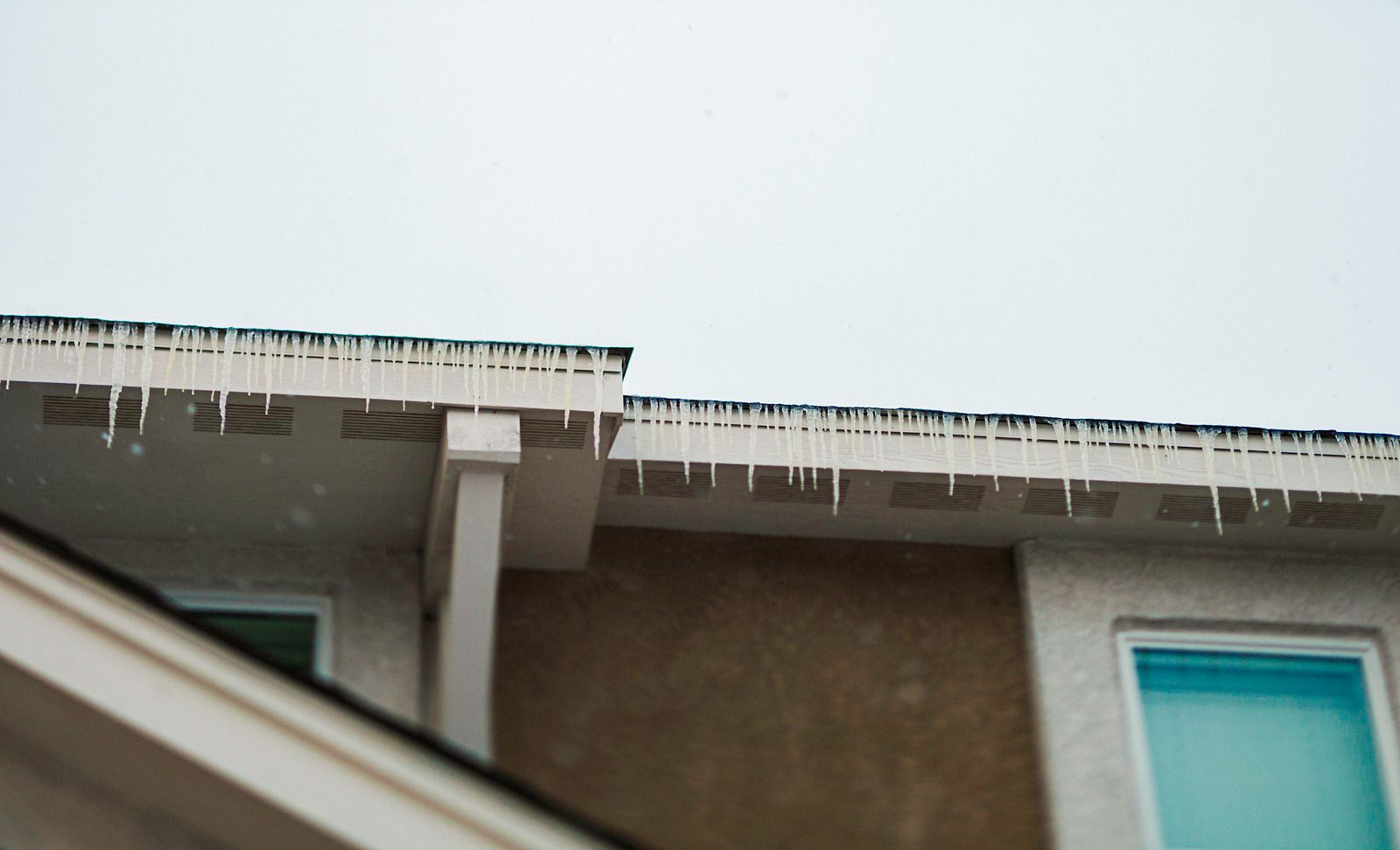
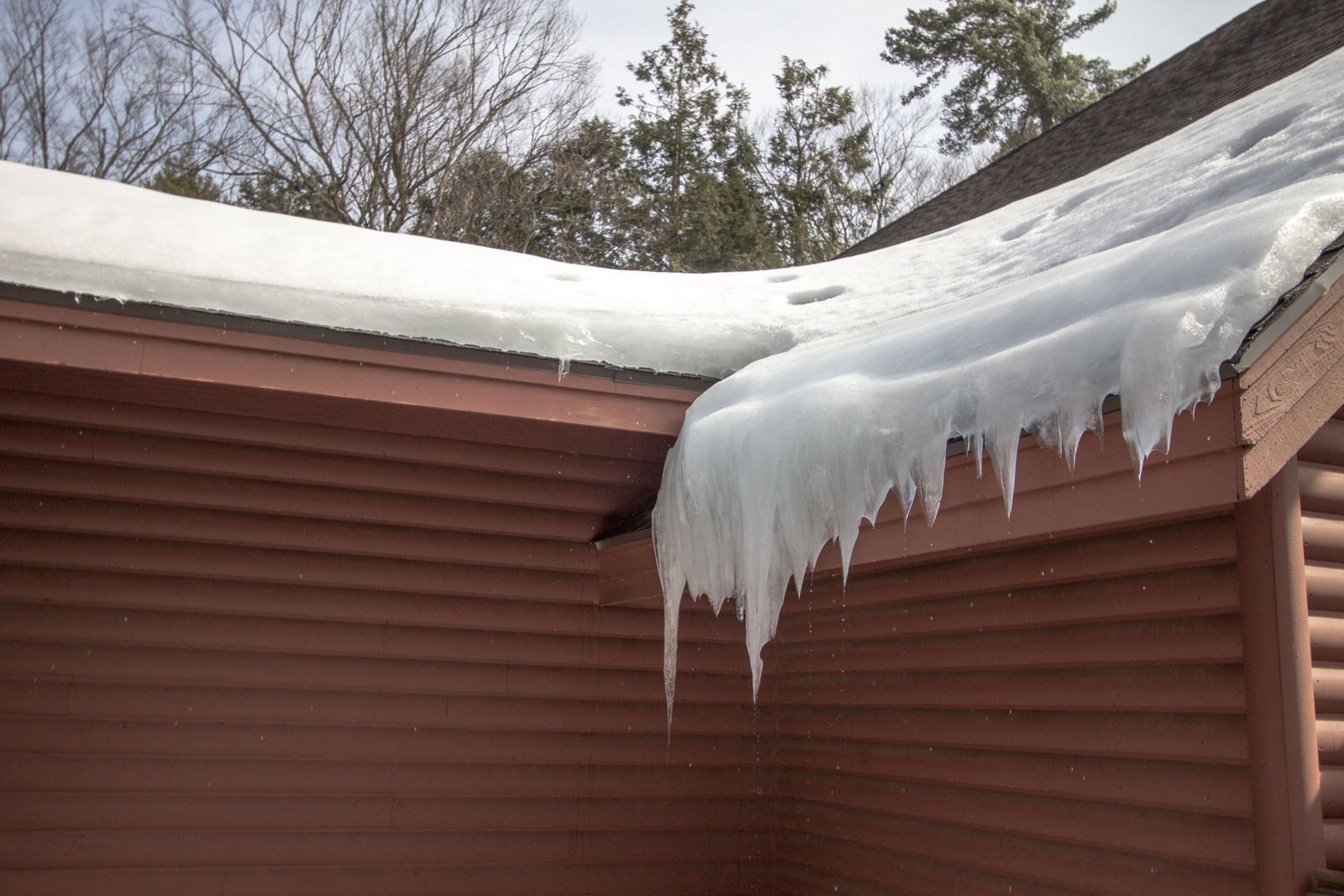
Your roof overhang, past the exterior wall line, isn't sitting above heated attic space. It stays at outdoor temperature. When the meltwater reaches that cold zone, it refreezes. Run this cycle for a few days and that ice builds into a ridge — the ice dam — sitting right along your roof edge, often visible from the ground as a thick, uneven bank of ice with icicles hanging off it.
New meltwater has nowhere to go but backward
Roof shingles are built to shed water that's moving downhill, not to hold back a pool. Once the dam is in place, meltwater coming down from above collects behind it instead of draining off the edge. That standing water finds the seams between shingles, works its way under them, and travels along the roof deck until it hits a gap, a nail hole, or a seam in the underlayment — at which point it drips into your attic and eventually shows up as a stain on the ceiling below.
That last step is the key to the on-again, off-again pattern. Water only backs up under the shingles while there's active melt happening above a dam that's still frozen solid. Cold snap with no melt: no new water, no new stain. Sunny afternoon with the dam still intact: water pools, finds a gap, and drips. It's not a coincidence that your stain tracks the weather — it's water physically responding to it, in real time, roof cycle after roof cycle.
One paint job or drywall patch will always look like a fix, right up until the next thaw proves it wasn't.
Tip: Walk your exterior after a snowfall and look at your roofline from the ground. A heavy, uneven buildup of ice at the eaves — especially compared to a roof edge that's mostly bare or lightly snow-covered — is often visible before a single stain ever shows up inside. Catching that pattern early gives you a head start on dealing with it before meltwater finds its way through the shingles.
Interior inspections help reveal roofing issues that may not yet be visible from the exterior.
Professionals look for:
- Water stains
- Discolored ceilings
- Damp insulation
- Mold growth
- Wood rot
- Structural deterioration
These indicators often reveal hidden leaks that require immediate attention.
Signs of Water Intrusion
The Stain Is a Symptom — Attic Heat Is the Cause
It's tempting to treat the ceiling itself as the problem, since that's where the damage is visible. But the ceiling didn't cause anything. It's just the lowest point where water traveling through your attic finally found a way out.
The actual cause sits higher up, in how much heat your attic is holding onto and how well that heat is getting vented away before it reaches the roof deck. Two things typically drive this:
Insulation gaps or thin coverage
If your attic floor insulation is uneven, compressed, or simply not thick enough for a Connecticut winter, warm air moves through it more easily than it should, and the roof deck above stays warmer than the outdoor air for longer stretches.
Poor attic ventilation
Even with decent insulation, an attic that can't exhaust the heat that does get in will run warmer overall. Ridge vents, soffit vents, and a clear air path between them are what let that heat escape before it warms the underside of your shingles. When those pathways are blocked — by insulation stuffed into the soffits, for example — heat has nowhere to go but up into the roof deck.
Homes across Southington, West Hartford, Bristol, Cheshire, and the rest of central Connecticut deal with exactly the freeze-thaw pattern that turns these attic conditions into visible ice dams. It's less about any one bad storm and more about how a roof and attic behave across an entire winter of temperature swings.
Interior inspections help reveal roofing issues that may not yet be visible from the exterior.
Professionals look for:
- Water stains
- Discolored ceilings
- Damp insulation
- Mold growth
- Wood rot
- Structural deterioration
These indicators often reveal hidden leaks that require immediate attention.
Signs of Water Intrusion
Why Patching the Ceiling Doesn't Solve Anything
Once the stain dries out between melt cycles, it's tempting to just paint over it, especially if it's small and out of the way. That approach handles the cosmetic issue for exactly as long as the weather cooperates.
The problem is that the pathway water took to get there is still open. The shingles, underlayment, or flashing that let water through the first time haven't changed. The attic conditions that built the ice dam haven't changed. The next stretch of snow followed by a thaw will send water down the same path, into the same spot, and the stain will come back — often larger, because the plywood, insulation, or framing behind that ceiling has now absorbed moisture more than once.
Warning: Repeated wetting in the same spot, even if it dries out between events, is how hidden rot and mold get started in ceiling framing and attic insulation. Because the area looks dry most of the winter, it's easy to assume the damage stopped when the stain stopped growing. It usually hasn't — it's just waiting for the next melt.
Interior inspections help reveal roofing issues that may not yet be visible from the exterior.
Professionals look for:
- Water stains
- Discolored ceilings
- Damp insulation
- Mold growth
- Wood rot
- Structural deterioration
These indicators often reveal hidden leaks that require immediate attention.
Signs of Water Intrusion
What Actually Needs Attention
Solving a stain like this means working backward from where the water ends up to where it's getting in, and then further back to why it's getting in at all.
That typically means a look at the roof edge itself — the flashing, the ice-and-water barrier under the shingles at the eaves, and the condition of the shingles in that zone — since that's where meltwater is physically breaching the roof. It also means a look at the attic above the affected area, checking for insulation gaps, blocked ventilation paths, and any air leaks from the living space that are feeding warm air upward. A roof that keeps forming ice dams in the same location year after year is usually telling you something specific about that section of the attic, not just delivering bad luck.
An inspection that connects the interior stain to the exterior roof edge and the attic conditions in between is the only way to tell a one-time weak spot apart from a pattern that will repeat every winter until someone addresses it.
Interior inspections help reveal roofing issues that may not yet be visible from the exterior.
Professionals look for:
- Water stains
- Discolored ceilings
- Damp insulation
- Mold growth
- Wood rot
- Structural deterioration
These indicators often reveal hidden leaks that require immediate attention.
Signs of Water Intrusion
Frequently Asked Questions
Does a stain that only appears during snowmelt mean the leak is small?
Not necessarily. Ice dam leaks can move a surprising amount of water in a short window, even when the stain looks modest. Stain size reflects travel path, not the actual volume of water.
If the stain isn't growing between storms, is it safe to wait until spring?
Waiting lets the same dam-and-backup cycle repeat every freeze-thaw swing. Moisture doesn't need constant flow to damage insulation or framing, repeated exposure over a winter adds up even without visible growth.
Could this be condensation instead of an ice dam leak?
Possibly, but condensation behaves differently, showing up as widespread frost or dampness rather than a stain tied to specific melt events. A stain tracking with snowmelt at the roof edge points to ice dam backup.
Will adding more attic insulation on its own fix this?
Insulation is usually part of the answer, but it works with ventilation and roof edge protection. Insulation without a clear vent path can leave warm pockets, so the fix needs the whole system addressed.
Interior inspections help reveal roofing issues that may not yet be visible from the exterior.
Professionals look for:
- Water stains
- Discolored ceilings
- Damp insulation
- Mold growth
- Wood rot
- Structural deterioration
These indicators often reveal hidden leaks that require immediate attention.
Signs of Water Intrusion
Reading the Pattern Before It Becomes Rot
A ceiling stain that only shows up when snow starts melting isn't behaving randomly — it's following the exact rhythm of an ice dam pushing water backward under the shingles. That pattern is worth paying attention to, because it points to a problem sitting higher up, in attic heat and roof edge protection, rather than in the ceiling itself. Recognizing that difference early keeps a manageable repair from turning into hidden rot, soaked insulation, or damaged framing that only reveals itself after another few winters of the same freeze-thaw cycle repeating overhead.
Valley Roofing LLC
has spent over 35
years working on roofs throughout Southington, CT, watching this same freeze-thaw pattern play out on homes across the region winter after winter. That depth of experience makes it easier to trace a stain back through the attic to the exact spot on the roof's edge where water found its way in, rather than guessing at the cause from the ceiling down. A roof sending the same signal every winter is one worth listening to, and understanding why it happens is the first real step toward a lasting fix.